
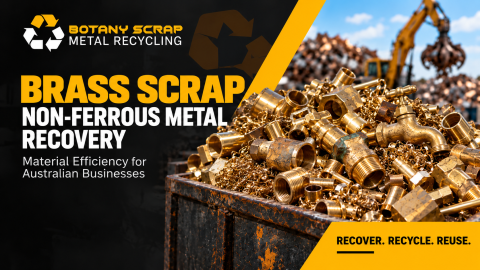
Australian businesses across manufacturing, construction, plumbing, engineering, demolition, and maintenance generate different types of metal waste every day. Among these materials, Brass Scrap represents a valuable recoverable resource rather than ordinary industrial waste.
Through Brass Scrap Non-Ferrous Metal Recovery, businesses can collect, sort, process, and return unwanted brass materials to productive use. This approach helps improve material efficiency by reducing unnecessary waste, recovering valuable metals, and supporting more circular industrial supply chains.
For Australian businesses, effective brass recovery can also complement broader sustainability and waste-management strategies. Botany Recycling helps businesses manage recyclable scrap materials and make better use of valuable Non-Ferrous Metals.
What Is Brass Scrap Non-Ferrous Metal Recovery?
Brass Scrap Non-Ferrous Metal Recovery is the process of recovering usable brass from discarded products, manufacturing offcuts, construction waste, plumbing components, and other industrial materials.
Brass is a Non-Ferrous Metal primarily made from copper and zinc. It is valued for its durability, corrosion resistance, machinability, and versatility.
Common sources of Brass Scrap include:
- Brass pipes and fittings
- Valves and taps
- Plumbing components
- Industrial fittings
- Engineering components
- Manufacturing offcuts
- Machined brass parts
- Demolition materials
- Electrical components
- Commercial and maintenance waste
Instead of allowing these materials to enter general waste streams, businesses can separate them for recovery and recycling.
Why Does Material Efficiency Matter for Australian Businesses?
Material efficiency means getting greater value from the resources a business purchases, uses, processes, and eventually discards.
When businesses improve material efficiency, they can reduce unnecessary material losses while making better use of resources already available within their operations.
For example, a manufacturing business may produce brass offcuts during fabrication. If those offcuts are placed into general waste, the business loses the opportunity to recover the material. If the same offcuts are separated and sent for recycling, they become a recoverable resource.
This creates a simple shift:
Industrial waste → Brass Scrap → Recovery → Processing → Reuse
The result is a more efficient material cycle.
How Does Brass Scrap Recovery Improve Material Efficiency?
1. It Recovers Valuable Metal
Brass contains valuable copper and zinc. Recovering these metals allows them to remain within the wider manufacturing supply chain.
Instead of treating used brass as disposable waste, businesses can direct it toward appropriate recycling channels.
2. It Reduces Material Loss
Poorly managed scrap can become mixed with general waste, making recovery more difficult.
Separating Brass Scrap at the source reduces the risk of valuable metal being lost during normal waste disposal.
3. It Supports Secondary Raw Materials
Recovered brass can be processed and used as a secondary material for future manufacturing.
This creates an additional resource stream alongside primary metal production.
4. It Improves Waste Segregation
A structured scrap-management system encourages businesses to identify different materials before they enter mixed waste.
This can make recycling operations more organised and improve the quality of recyclable material.
5. It Supports Circular Resource Use
Brass recovery helps keep metals in circulation for longer. Instead of following a linear model of production, use, and disposal, businesses can participate in a more circular system.
Common Sources of Brass Scrap in Australian Businesses
Different industries generate Brass Scrap in different ways.
Manufacturing and Fabrication
Manufacturers may generate brass offcuts, machining waste, rejected components, and production remnants.
Separating these materials allows businesses to recover metal that would otherwise become industrial waste.
Plumbing
Plumbing businesses frequently handle brass taps, valves, connectors, fittings, and other components.
During upgrades and replacement work, these materials can be collected and directed toward recycling.
Construction and Demolition
Renovation and demolition projects can generate brass fixtures, fittings, hardware, and other metal components.
Separating these materials from general construction waste improves the potential for recovery.
Engineering
Engineering and machining businesses can generate brass turnings, offcuts, components, and fabrication waste.
Organised scrap collection can help these businesses recover more of the material they use.
Maintenance and Commercial Operations
Businesses involved in facility maintenance may regularly replace brass fittings and components.
Collecting these materials separately can create a consistent recycling stream.
The Brass Scrap Recovery Process
Effective material recovery usually involves several stages.
Collection
Brass materials are collected from industrial, commercial, construction, plumbing, and manufacturing activities.
Businesses can improve this stage by using dedicated containers for recyclable metal.
Sorting
Collected scrap is sorted according to material type and condition.
Separating brass from aluminium, copper, steel, plastic, and other materials helps improve the quality of the recycling stream.
Preparation
Unwanted attachments and contaminants may need to be removed before further processing.
Cleaner and better-separated material can make downstream recovery more efficient.
Processing
The prepared brass is processed through appropriate recycling systems to recover its usable metal content.
Recovered material can then become part of the secondary raw-material supply chain.
Reuse
Processed brass can return to manufacturing and industrial applications, creating another stage in its useful life.
Brass Scrap and the Circular Economy
The circular economy focuses on keeping materials in productive use for as long as possible.
Brass fits naturally into this model because its metal content remains valuable after the original product has reached the end of its useful life.
A simplified circular brass system looks like this:
Manufacturing → Product Use → Brass Scrap → Collection → Recovery → Processing → New Products
This approach reduces the emphasis on disposal and increases the focus on material recovery.
Businesses that already recycle other Non-Ferrous Metals can incorporate Brass Scrap into a broader resource-recovery strategy.
Why Proper Brass Scrap Sorting Matters
Not all scrap has the same composition, condition, or recycling value. Brass may appear alongside copper, aluminium, steel, plastic, rubber, coatings, and other materials.
Source separation can therefore play an important role in efficient recovery.
Businesses should consider:
- Keeping brass separate from ferrous metals
- Avoiding unnecessary contamination
- Separating brass from general waste
- Storing recyclable materials in dedicated areas
- Identifying different scrap categories
- Working with an experienced recycling provider
Better segregation can make collection and processing more straightforward while reducing material losses.
How Brass Scrap Recovery Can Benefit Different Australian Industries
Manufacturing
Manufacturers can recover production offcuts and machining waste rather than sending valuable metal into general waste.
Construction
Construction companies can separate brass fixtures and fittings during renovation and demolition activities.
Plumbing
Plumbers can collect removed brass fittings, valves, taps, and connectors for recycling.
Engineering
Engineering companies can establish dedicated collection systems for brass machining and fabrication waste.
Property Maintenance
Maintenance teams can recover brass components removed during repairs and replacements.
Across these industries, the principle remains the same: recover useful material before it becomes mixed waste.
Brass Scrap Recovery and Business Sustainability
Sustainability is increasingly connected with how businesses manage materials throughout their operational lifecycle.
A company may purchase metal for manufacturing or construction, use that material to produce or maintain products, and eventually generate scrap.
The final stage matters.
If scrap enters general waste, the material cycle ends prematurely. If businesses recover the material, its useful life can continue through recycling.
This makes Brass Scrap recovery relevant to broader sustainability strategies involving:
- Resource efficiency
- Waste reduction
- Circular economy practices
- Material recovery
- Responsible waste management
- Secondary raw-material use
- Industrial sustainability
Brass Scrap and Other Non-Ferrous Metal Recovery
Businesses rarely generate only one type of metal waste. A manufacturing, construction, or engineering operation may handle brass alongside copper, aluminium, and other Non-Ferrous Metals.
A broader recycling strategy can therefore help businesses manage different material streams more effectively.
Businesses interested in Australia’s brass recycling landscape can read Why Brass Scrap Non-Ferrous Metal Recycling Is Growing Worldwide for additional information about the wider importance of brass recovery.
For an Australia-focused resource, Brass Scrap Non-Ferrous Metal Recycling Australia provides further information about brass recycling and recovery.
Businesses can also explore Botany Recycling’s Brass Scrap service to learn more about professional brass scrap recycling options.
How Australian Businesses Can Improve Brass Scrap Recovery
Improving material efficiency does not always require major operational changes. Businesses can begin with practical improvements to everyday waste handling.
Create Dedicated Scrap Collection Points
Place clearly identified containers where employees generate brass waste.
Train Staff to Separate Materials
Employees should understand the difference between recyclable brass and general waste.
Keep Brass Free From Unnecessary Contamination
Separating plastic, rubber, packaging, and other unwanted materials can improve the quality of collected scrap.
Monitor Scrap Generation
Tracking how much brass waste a business generates can help identify opportunities to reduce material losses.
Establish a Regular Collection System
Consistent collection prevents recyclable metal from accumulating in unsuitable waste streams.
Work With a Professional Recycler
A dedicated recycling provider can help businesses move Brass Scrap from collection through to recovery more efficiently.
Why Choose Botany Recycling for Brass Scrap?
Botany Recycling supports businesses looking to recover value from recyclable metal waste.
Professional scrap recycling can help businesses manage Brass Scrap more effectively while supporting wider Non-Ferrous Metal recovery goals.
By separating brass at the source and sending it through an appropriate recycling channel, businesses can help keep valuable materials within productive use.
For Australian businesses generating brass fittings, components, offcuts, and other recyclable materials, Botany Recycling provides a practical route toward better scrap management and material recovery.
The Future of Brass Scrap Non-Ferrous Metal Recovery in Australia
As Australian businesses continue to focus on resource efficiency and responsible waste management, the role of metal recovery is likely to become increasingly important.
Brass Scrap offers a clear opportunity because it combines recoverable material value with established industrial uses.
The future of efficient brass recovery will depend on several factors, including better source separation, improved collection systems, effective sorting, cleaner scrap streams, and stronger connections between recyclers and manufacturers.
For businesses, the most important step is simple: do not treat valuable brass as ordinary waste.
Recovering Brass Scrap can help businesses make better use of materials, reduce unnecessary waste, and contribute to a more circular industrial economy.
Conclusion
Brass Scrap Non-Ferrous Metal Recovery helps Australian businesses improve material efficiency by turning unwanted brass into a recoverable industrial resource.
From manufacturing offcuts and plumbing fittings to construction materials and engineering components, Brass Scrap can be collected, sorted, processed, and returned to productive use.
For businesses, better brass recovery can support resource efficiency, reduce material loss, improve waste segregation, and strengthen circular economy practices.
With the support of Botany Recycling, Australian businesses can take a more organised approach to Brass Scrap recovery and make better use of valuable Non-Ferrous Metal resources.


